July 3, 2026
 In anticipation of the 2026 Tour de France which begins on Saturday, July 4, we turned to the five part series of the Phil Liggett Story available on Peacock and YouTube.
Presented by the Tour de France coverage team, the series seeks to reveal the secret behind Phil Liggett’s success as a commentator on the Tour de France.
I have known Phil as a viewer of the TDF for close to 18 years when I first started covering the Tour myself as a journalist, first for Benepe’s Bike Blog, then for Cyclists International.
During my limited exposure to Phil, he has been the voice of the TDF–though along with Paul Sherwen for 33 years until Sherwen passed away in December 2018 at his home in Uganda.
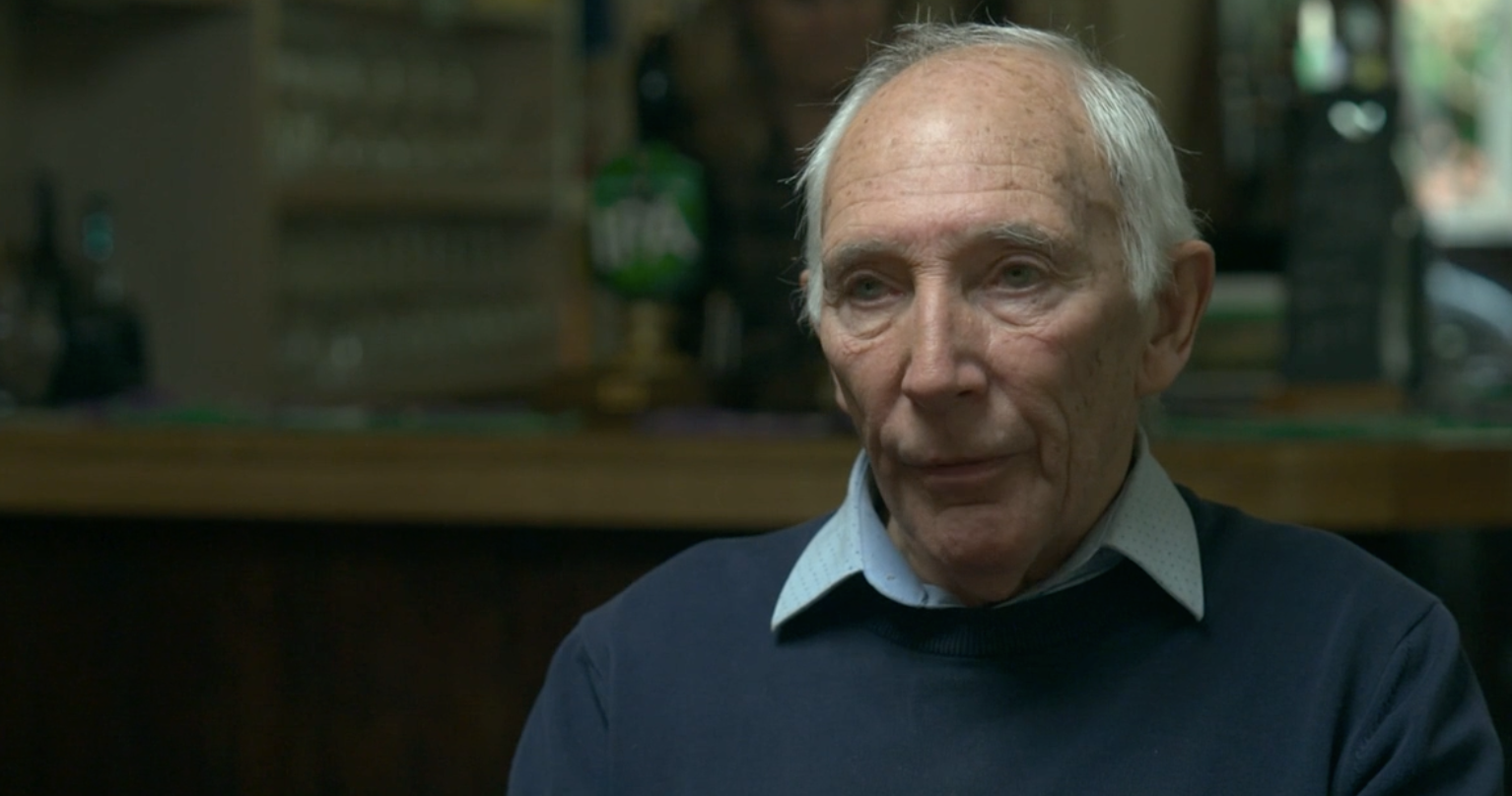
Through a series of interviews conducted by Paul Burmeister, NBC and Peacock commentator, as well as Tour de France commentator at the roundtable since 2016, and set at Liggett’s favorite bar in his hometown over a big glass (or more) of beer, Liggett tells the story of his early cycling career, through his journalism experience, and eventually to his notable coverage of the Tour de France.
For racing lovers, this is a must-see series that delves deeply into the life of Phil Liggett in a way we have never seen before. For a journalist, it is the tracing of a journalist’s and cyclist’s career which is so fascinating. Any cycling journalist I have ever met is also an avid cyclist and often competitor themself, and so was Phil. Starting with the love of the sport, he went from print reporting on Fleet Street in London, to race management, and finally to the Tour de France coverage. 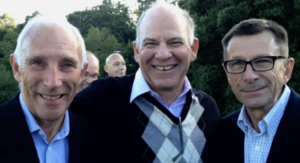
From what we learn through this series, Phil never had to go looking for work after his first short-lived job at a zoo, a job he quit because he rode to work on his bike and collided with an elephant as he rounded the corner. No one had told him it was open pen day for the animals, and indignant, he quit on the spot.
After that, all of his work just came to him as did his adept ability to quickly adjust to any new reporting challenge. He was thrust into radio and TV commentary without any experience for the work but almost immediately found his voice.
In the early days he reported on races when Paul Sherwen was a competitor, and later Paul joined him on television commentary for 33 years. The two understood each other perfectly and blended beautifully in delivering commentary. Sherwen apparently took meticulous notes on the racers and their times so it was easier to call the race while they were observing it. He details how he and Sherwen made their commentary interesting for the non-cycling public, by including historical and epic facts about France throughout the grand race, often commenting on old castles, towns and famous wine regions.
Bob Roll took Sherwen’s TDF reporting role after Sherwen died, and Liggett gives him big kudos for filling the 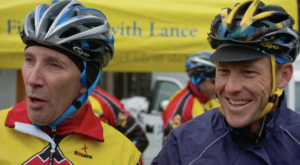 Brit’s shoes.
Burmeister doesn’t shrink away from the important subject of Lance Armstrong, whom Liggett admired until the drug scandal broke. But Liggett does say right up front that many other riders cheated and they were still offered jobs and or forgiven on the European scene. Not Armstrong, he says, because Armstrong played them.
While this technicality is not fully transparent or understandable–Armstrong technically went down because Floyd Landis and the Justice Department took him down–and the European greats who have cheated including the great Eddy Merckx –have always been forgiven because no one in Europe is willing to take down the sport of cycling the way Acting Assistant Attorney General for the Justice Department’s Civil Division Chad A. Readler did.
But he also gives Armstrong great kudos, hailing him as an empathetic and generous person who cared about people with cancer, and touched them in personal ways even when he did not have to. He also states unequivocally if not one person had been cheating at the Tour, Lance would still have been a champion–maybe not a 7-time Tour winner–but a winner of many Tours.
Liggett also aptly points out that after Lance admitted to EPO performance enhancement, it killed half the American audience for the Tour. And Liggett suffered tremendous blowback from the British press whom he says blamed him for not knowing all along that Armstrong was doping.
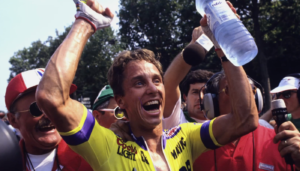
Liggett also recounts his most memorable Tour when Greg LeMond won against Laurent Fignon by 55 seconds in the final time trial into Paris. He also speaks about the death of Olympic Gold Medalist Fabio Casartelli in July 1995, who happened to at one time to be Lance’s roommate, on the descent of the Col de Portet d’Aspet in the 15th stage. “No one should die during the Tour de France,” says Liggett sadly.
 Much of the series that lacks actual video footage relies on cartoons that have the look and feel of cheap AI to tell the narrative. However, it is as forgivable as it is negligible.
Amazingly, Phil Liggett looks much younger than his 82 years, and his ability to announce the Tour on a yearly basis–a grueling three week marathon of thousands of miles of travel and little to no sleep–is a tremendous feat at any age. His ability to continue unique and entertaining commentary through an entire coverage of the Tour (now hosted by Peacock and available by subscription only, or on NBCSN) is his alone. No one today matches Phil Liggett.
The series is well worth watching, for the love of the sport, the love of journalism and the love of Liggett’s amazing Tour de France coverage.